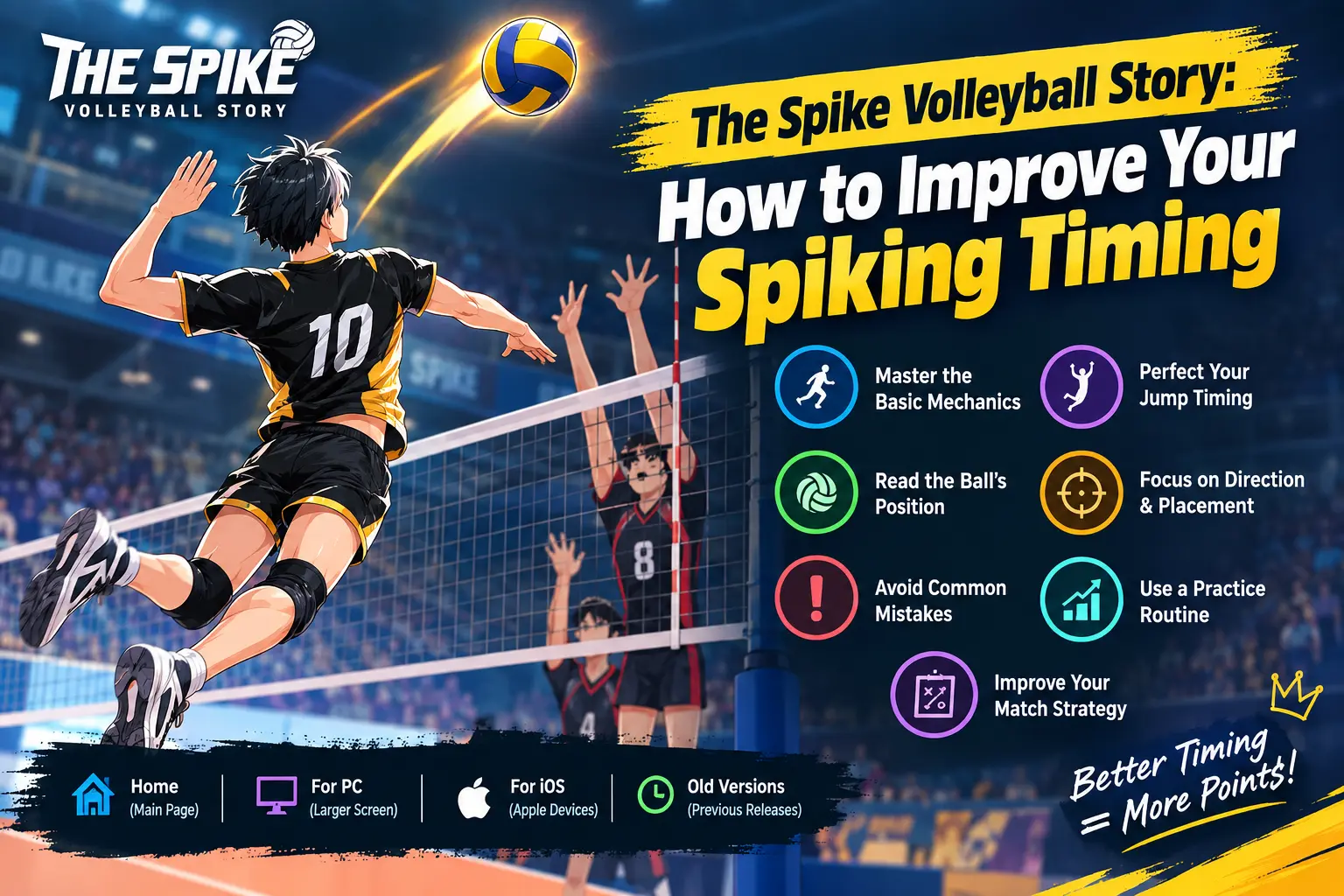
The Spike Volleyball Story: How to Improve Your Spiking Timing
Spiking is one of the most important attacking skills in The Spike Volleyball Story. A well-timed attack can help you score points, put pressure on the opposing team, and make difficult rallies easier to control. However, simply tapping the attack button as quickly as possible does not always produce the result you want.
To improve your performance, you need to understand the relationship between your approach, jump, ball position, and attack timing. In this guide, you will learn practical The Spike Volleyball Story spiking tips that can help beginners develop better timing and make more consistent attacking decisions.
Whether you are still learning the controls or trying to improve your match performance, these tips can help you build a more effective practice routine.
1. Understand the Basic Spiking Mechanics
Before attempting powerful attacks, become familiar with the game’s basic controls. Learn how your player moves, jumps, and performs an attack. Pay attention to the timing between the ball’s movement and your player’s position.
A successful spike depends on more than attack power alone. If you jump too early or attack when the ball is poorly positioned, your shot may become less effective.
Start with simple rallies and focus on making clean contact with the ball. Once you feel comfortable with the basic controls, gradually work on faster approaches and more challenging attacks.
2. Practice Your Jump Timing
Jump timing is an important part of an effective spike. Jumping too early can make it difficult to coordinate your attack with the ball, while jumping too late may leave you in a poor position to hit it.
Try the following practice method:
- Watch the ball carefully as it approaches your player.
- Pay attention to its height and position.
- Coordinate your jump with the ball’s movement.
- Observe the result of each attack.
- Repeat the sequence until your timing becomes more consistent.
Do not focus only on hitting the ball as hard as possible. First, learn to perform attacks at the right moment. Better timing can make your attacking attempts more controlled and repeatable.
3. Learn to Read the Ball’s Position
Ball awareness can help you make better attacking decisions. Before attempting a spike, observe where the ball is and how it is moving.
If you attack without considering the ball’s position, you may struggle to make clean contact. Instead, pay attention to the rally and adjust your movement according to the situation.
During practice, ask yourself three questions:
- Is the ball in a suitable position for an attack?
- Is my player ready to jump?
- Am I reacting too early or too late?
Reviewing these details after each rally can help you recognize patterns in your mistakes and improve your overall control.
4. Focus on Attack Direction and Placement
Powerful attacks are useful, but placement also matters. A predictable attacking pattern can become difficult to rely on when opponents repeatedly defend against it.
When the controls and situation allow it, experiment with different attack directions and observe how the opposing team responds.
Try changing your approach instead of repeating exactly the same attack in every rally. Notice which choices work well in different situations, and use those observations to develop your own playing style.
Remember that not every attack needs to be a maximum-power hit. Choosing an appropriate attack for the situation can be more useful than relying on power alone.
5. Avoid These Common Spiking Mistakes
Many beginners make similar mistakes when learning to attack in The Spike Volleyball Story. Identifying these habits is a useful step toward improvement.
Jumping Too Early
An early jump can disrupt your timing and make it harder to coordinate your attack with the ball. Practice observing the ball before committing to the jump.
Attacking Without Watching the Ball
Focusing only on your player can cause you to miss important changes in ball position. Keep your attention on the rally and adjust your actions accordingly.
Repeating the Same Attack
Using the same approach repeatedly may make your play predictable. Experiment with timing and placement when the situation permits.
Ignoring Practice
Trying to improve every skill during competitive matches can make it harder to identify individual problems. Practice one skill at a time and evaluate the results.
Blaming Every Miss on Player Stats
Character attributes can affect gameplay, but not every unsuccessful attack is caused by low stats. Timing, positioning, and control decisions are also worth reviewing before changing your character build.
6. Use a Simple Spiking Practice Routine
You do not need a complicated training plan to start improving. A short, focused practice session can help you identify the areas that need attention.
Try this routine whenever you have time to practice:
Step 1: Warm up with basic rallies. Get comfortable with movement, jumping, and attacking.
Step 2: Focus on timing. Perform several attacks while paying attention to the relationship between the ball and your jump.
Step 3: Review missed attacks. Think about whether your timing, positioning, or decision-making caused the problem.
Step 4: Experiment with placement. When possible, try different attacking directions instead of repeating the same shot.
Step 5: Test your progress in a match. Apply what you practiced and observe whether your attacks become more consistent.
Change one thing at a time. This makes it easier to understand which adjustments actually help your performance.
7. Improve Your Overall Match Strategy
Spiking is only one part of volleyball gameplay. Strong attacking decisions also depend on what happens before the ball reaches your player.
Pay attention to your teammates, the flow of the rally, and the opponent’s defensive position. A good opportunity to attack may depend on the setup rather than the strength of your final hit.
You should also learn to balance offense and defense. Spending all your attention on attacking can leave you less prepared to react when the opposing team takes control of the rally.
If you want to learn more about the game, visit our The Spike Volleyball Story MOD APK homepage. Players who prefer playing on a larger screen can check our guide to The Spike MOD APK for PC.
If you play on an Apple device, explore our The Spike Volleyball Story for iOS guide. Players interested in previous releases can also visit our The Spike Volleyball Story old versions page to explore older versions.
Choose the guide that matches your device and interests for more information about the game.
Frequently Asked Questions
How can I improve my spiking timing in The Spike Volleyball Story?
Start by observing the ball’s position and movement before jumping. Practice coordinating your jump and attack, then review missed attempts to identify timing or positioning problems.
Why do I keep missing spikes in The Spike Volleyball Story?
Missed spikes can result from poor timing, unsuitable positioning, incorrect control inputs, or the situation during a rally. Review each attempt rather than assuming every miss has the same cause.
Is attack power the only important factor when spiking?
No. Attack power may matter, but timing, positioning, ball contact, and attacking decisions also influence how effectively you play.
Should beginners focus on power or timing first?
Beginners should develop control and consistent timing before concentrating entirely on power. This gives you a more reliable foundation for learning advanced attacking techniques.
Can practicing the same attack help me improve?
Repeating an attack can help you learn its timing, but you should also practice different situations and placements. Focused repetition combined with reviewing mistakes is more useful than tapping randomly.
Final Thoughts
Improving your spiking in The Spike Volleyball Story takes practice, patience, and attention to detail. Start with the basic controls, work on your jump timing, observe the ball carefully, and learn from missed attacks.
Instead of trying to master every technique at once, focus on one improvement at a time. With consistent practice, you can develop better attacking habits and make more confident decisions during matches.
Keep experimenting with your approach and use each rally as an opportunity to learn.
ing is one of the most important attacking skills in The Spike Volleyball Story. A well-timed attack can help you score points, put pressure on the opposing team, and make difficult rallies easier to control. However, simply tapping the attack button as quickly as possible does not always produce the result you want.
To improve your performance, you need to understand the relationship between your approach, jump, ball position, and attack timing. In this guide, you will learn practical The Spike Volleyball Story spiking tips that can help beginners develop better timing and make more consistent attacking decisions.
Whether you are still learning the controls or trying to improve your match performance, these tips can help you build a more effective practice routine.
1. Understand the Basic Spiking Mechanics
Before attempting powerful attacks, become familiar with the game’s basic controls. Learn how your player moves, jumps, and performs an attack. Pay attention to the timing between the ball’s movement and your player’s position.
A successful spike depends on more than attack power alone. If you jump too early or attack when the ball is poorly positioned, your shot may become less effective.
Start with simple rallies and focus on making clean contact with the ball. Once you feel comfortable with the basic controls, gradually work on faster approaches and more challenging attacks.
2. Practice Your Jump Timing
Jump timing is an important part of an effective spike. Jumping too early can make it difficult to coordinate your attack with the ball, while jumping too late may leave you in a poor position to hit it.
Try the following practice method:
- Watch the ball carefully as it approaches your player.
- Pay attention to its height and position.
- Coordinate your jump with the ball’s movement.
- Observe the result of each attack.
- Repeat the sequence until your timing becomes more consistent.
Do not focus only on hitting the ball as hard as possible. First, learn to perform attacks at the right moment. Better timing can make your attacking attempts more controlled and repeatable.
3. Learn to Read the Ball’s Position
Ball awareness can help you make better attacking decisions. Before attempting a spike, observe where the ball is and how it is moving.
If you attack without considering the ball’s position, you may struggle to make clean contact. Instead, pay attention to the rally and adjust your movement according to the situation.
During practice, ask yourself three questions:
- Is the ball in a suitable position for an attack?
- Is my player ready to jump?
- Am I reacting too early or too late?
Reviewing these details after each rally can help you recognize patterns in your mistakes and improve your overall control.
4. Focus on Attack Direction and Placement
Powerful attacks are useful, but placement also matters. A predictable attacking pattern can become difficult to rely on when opponents repeatedly defend against it.
When the controls and situation allow it, experiment with different attack directions and observe how the opposing team responds.
Try changing your approach instead of repeating exactly the same attack in every rally. Notice which choices work well in different situations, and use those observations to develop your own playing style.
Remember that not every attack needs to be a maximum-power hit. Choosing an appropriate attack for the situation can be more useful than relying on power alone.
5. Avoid These Common Spiking Mistakes
Many beginners make similar mistakes when learning to attack in The Spike Volleyball Story. Identifying these habits is a useful step toward improvement.
Jumping Too Early
An early jump can disrupt your timing and make it harder to coordinate your attack with the ball. Practice observing the ball before committing to the jump.
Attacking Without Watching the Ball
Focusing only on your player can cause you to miss important changes in ball position. Keep your attention on the rally and adjust your actions accordingly.
Repeating the Same Attack
Using the same approach repeatedly may make your play predictable. Experiment with timing and placement when the situation permits.
Ignoring Practice
Trying to improve every skill during competitive matches can make it harder to identify individual problems. Practice one skill at a time and evaluate the results.
Blaming Every Miss on Player Stats
Character attributes can affect gameplay, but not every unsuccessful attack is caused by low stats. Timing, positioning, and control decisions are also worth reviewing before changing your character build.
6. Use a Simple Spiking Practice Routine
You do not need a complicated training plan to start improving. A short, focused practice session can help you identify the areas that need attention.
Try this routine whenever you have time to practice:
Step 1: Warm up with basic rallies. Get comfortable with movement, jumping, and attacking.
Step 2: Focus on timing. Perform several attacks while paying attention to the relationship between the ball and your jump.
Step 3: Review missed attacks. Think about whether your timing, positioning, or decision-making caused the problem.
Step 4: Experiment with placement. When possible, try different attacking directions instead of repeating the same shot.
Step 5: Test your progress in a match. Apply what you practiced and observe whether your attacks become more consistent.
Change one thing at a time. This makes it easier to understand which adjustments actually help your performance.
7. Improve Your Overall Match Strategy
Spiking is only one part of volleyball gameplay. Strong attacking decisions also depend on what happens before the ball reaches your player.
Pay attention to your teammates, the flow of the rally, and the opponent’s defensive position. A good opportunity to attack may depend on the setup rather than the strength of your final hit.
You should also learn to balance offense and defense. Spending all your attention on attacking can leave you less prepared to react when the opposing team takes control of the rally.
If you want to learn more about the game, visit our The Spike Volleyball Story MOD APK homepage. Players who prefer playing on a larger screen can check our guide to The Spike MOD APK for PC.
If you play on an Apple device, explore our The Spike Volleyball Story for iOS guide. Players interested in previous releases can also visit our The Spike Volleyball Story old versions page to explore older versions.
Choose the guide that matches your device and interests for more information about the game.
Frequently Asked Questions
How can I improve my spiking timing in The Spike Volleyball Story?
Start by observing the ball’s position and movement before jumping. Practice coordinating your jump and attack, then review missed attempts to identify timing or positioning problems.
Why do I keep missing spikes in The Spike Volleyball Story?
Missed spikes can result from poor timing, unsuitable positioning, incorrect control inputs, or the situation during a rally. Review each attempt rather than assuming every miss has the same cause.
Is attack power the only important factor when spiking?
No. Attack power may matter, but timing, positioning, ball contact, and attacking decisions also influence how effectively you play.
Should beginners focus on power or timing first?
Beginners should develop control and consistent timing before concentrating entirely on power. This gives you a more reliable foundation for learning advanced attacking techniques.
Can practicing the same attack help me improve?
Repeating an attack can help you learn its timing, but you should also practice different situations and placements. Focused repetition combined with reviewing mistakes is more useful than tapping randomly.
Final Thoughts
Improving your spiking in The Spike Volleyball Story takes practice, patience, and attention to detail. Start with the basic controls, work on your jump timing, observe the ball carefully, and learn from missed attacks.
Instead of trying to master every technique at once, focus on one improvement at a time. With consistent practice, you can develop better attacking habits and make more confident decisions during matches.
Keep experimenting with your approach and use each rally as an opportunity to learn.